
Updated October 4, 2026
How Fugu Orchestration Actually Works
Sakana AI's Fugu takes an unusual approach: instead of building a bigger model, it builds a small smart router that coordinates other models. Here is how that actually works.
The orchestrator, not the model
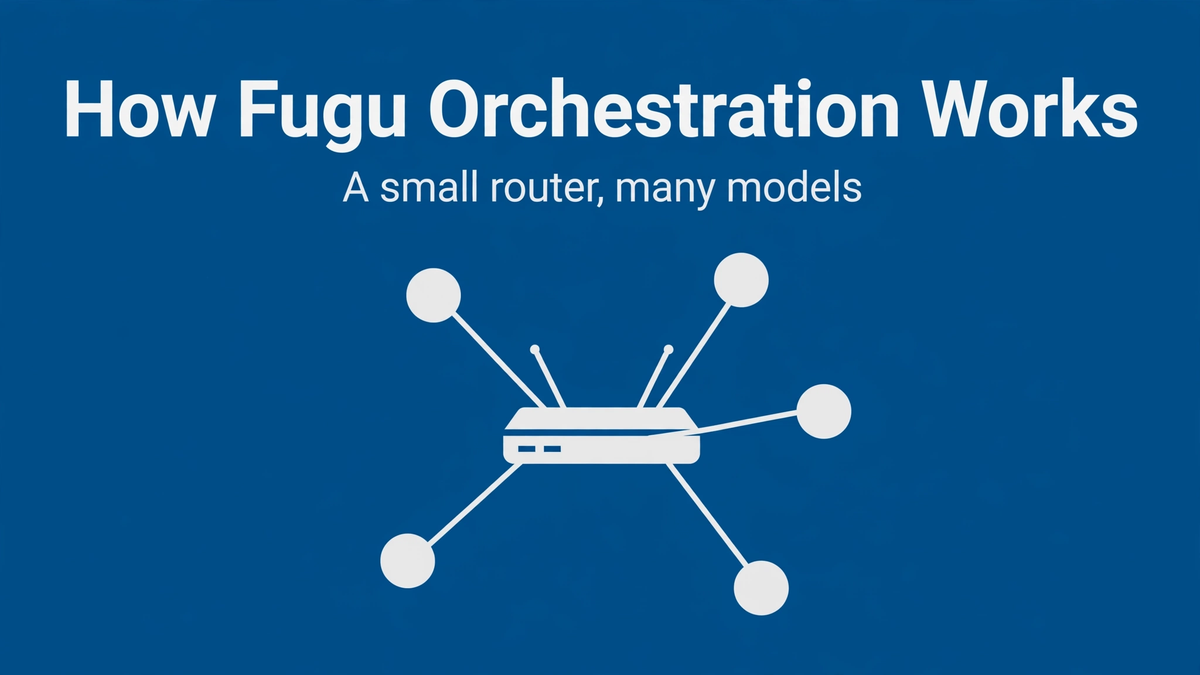
At Fugu's core is a 7-billion-parameter orchestrator — tiny by frontier standards. When you send it a task, it does not try to solve everything itself. It breaks the problem into subtasks, decides which external model is best suited for each part, delegates them, checks the outputs, and synthesizes everything into one answer. You interact with it through an OpenAI-compatible endpoint, so it slots into existing developer workflows.
Why this could matter
Frontier models are expensive to train and run. If a small orchestrator can match their quality on real work by routing cleverly — Sakana's reported scores put Fugu Ultra in frontier territory on coding and reasoning benchmarks — the economics of AI deployment change dramatically. You pay for orchestration plus targeted model calls instead of one giant model doing everything.
Why skepticism is healthy
These are vendor-reported benchmarks. Routing quality depends entirely on the pool of models available and the difficulty of the task — orchestration shines on decomposable work (analysis, research, coding) and matters less where a single model's raw capability dominates. Independent benchmark labs reproducing the scores is the credibility test to watch. The September 2026 Fugu Ultra v2 release is the next data point. Back to the Sakana Fugu overview.